EN
EN





- Overview
- Recommended Products
1.This product is a 40% (w/w) bispyribac‑sodium suspension concentrate (SC), belonging to the pyrimidinyloxybenzoic acid class of selective post‑emergence herbicides. Bispyribac‑sodium inhibits acetolactate synthase (ALS), a key enzyme in the biosynthesis of branched‑chain amino acids (valine, leucine, and isoleucine). This inhibition halts cell division and growth, leading to chlorosis, stunting, and eventual death of susceptible weeds.
2.It is specifically developed for use in rice (direct‑seeded, transplanted, and dry‑seeded rice) to control a broad spectrum of weeds, including barnyard grass (Echinochloa spp.), sedges (Cyperus spp.), and many annual broad‑leaved weeds. It also provides effective suppression of certain perennial weeds. Always apply according to the recommended rates within the registered and approved areas.
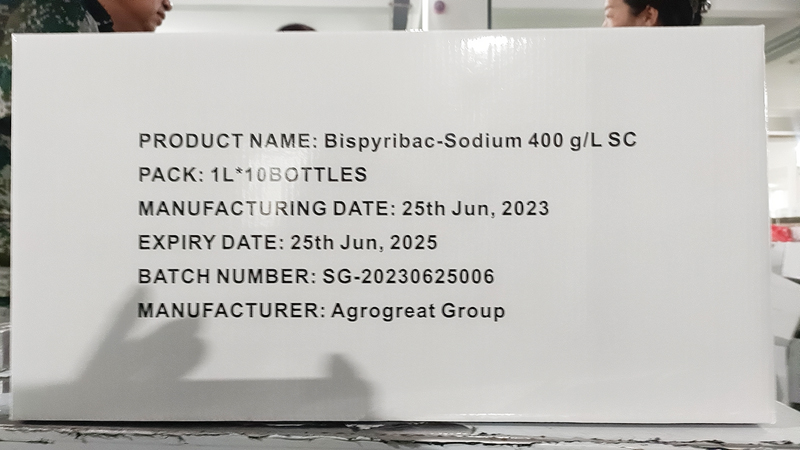
| Product Name | Bispyribac‑sodium 400g/L SC |
| Active ingredient | Bispyribac‑sodium |
| Active ingredient content | 400g/L |
| Formulation | SC, Suspension Concentrate |
| Product Category | Herbicide |
| Pendimethalin CAS No. | 125401‑92‑5 |
| Main Uses | Selective post‑emergence herbicide for control of grass weeds, sedges, and broad‑leaved weeds in rice. |
| Targeted Pests and Diseases | Barnyard grass (Echinochloa crus‑galli, E. colonum), sedges (Cyperus difformis, C. iria, C. rotundus), and broad‑leaved weeds (Monochoria vaginalis, Heteranthera limosa, Sagittaria spp., Ammannia spp., Lindernia spp.). |
| Minimum Order Quantity | 1000L |
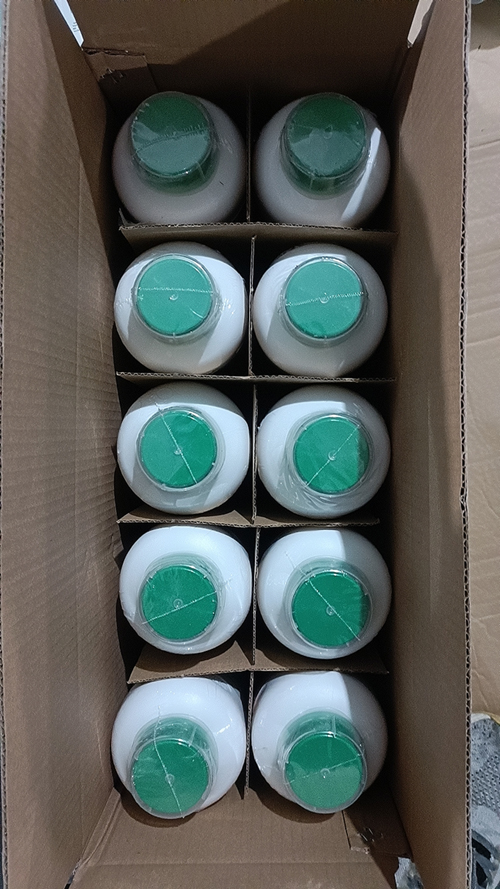
| Bulk packing | 1000L IBC drum, 200L drum, 20L drum |
| Small packing | 5L drum & 4drums/carton; 1L, 500ml, 250ml, 200ml, 100ml, 50ml bottle, 10L/carton |
| Documentation Support | ICAMA, COA, MSDS, TDS, Product Specifications,Packaging Information,etc. |
| Sample Service | Free for 200ml |
| Place of origin | China |
| Supplier | Agrogreat |
| Customized Services | bottle,label,bag, carton, logo Brand Customized |
 |
 |
Key Functions
Bispyribac‑sodium is a systemic, post‑emergence herbicide that is rapidly absorbed by both the foliage and roots of susceptible weeds, with translocation via both xylem and phloem to meristematic tissues. Its mode of action involves the inhibition of acetolactate synthase (ALS), also known as acetohydroxyacid synthase (AHAS), the first enzyme in the biosynthetic pathway of the branched‑chain amino acids valine, leucine, and isoleucine. By blocking this pathway, the herbicide stops protein synthesis and cell division in actively growing meristematic regions. Initial symptoms—growth inhibition and slight yellowing—appear within 3–5 days, followed by progressive chlorosis, reddening of the leaf tips, necrosis of the growing points, and complete plant death within 1–3 weeks, depending on weed species, growth stage, and environmental conditions. Bispyribac‑sodium is highly selective to rice due to its rapid metabolism to inactive compounds in the crop, while susceptible weeds undergo prolonged exposure. The SC formulation ensures excellent particle suspension stability, good leaf retention, and consistent biological efficacy.
Key Benefits
1.Broad‑spectrum weed control in rice—effectively controls barnyard grass (including some resistant biotypes), sedges, and a wide range of annual broad‑leaved weeds, providing a comprehensive solution for rice weed management.
2.Excellent crop safety—rice (both indica and japonica varieties) shows excellent tolerance when applied at recommended growth stages (from 2‑leaf to tillering), with no adverse effects on plant height, tillering, or yield.
3.Flexible application timing—can be applied from early post‑emergence (1‑leaf stage of weeds) up to the late tillering stage of rice, offering a wide window of effective weed control.
4.Highly effective against hard‑to‑control weeds such as Echinochloa species and sedges, including those resistant to other herbicide groups (e.g., ACCase inhibitors, synthetic auxins), making it a valuable tool for resistance management.
5.Rapid absorption and rainfastness—within 1–2 hours after application, ensuring reliable performance even under unpredictable weather conditions.
6.SC formulation offers excellent suspensibility, low viscosity, and good tank‑mix compatibility with other rice herbicides, insecticides, and fungicides, allowing flexible integrated pest management (IPM) programs.
7.Low use rate and favorable environmental profile—rapid degradation in soil and water, with minimal risk of carry‑over to rotational crops when used as directed.
●The actual applicable crops and control spectrum shall strictly comply with the provisions of the locally registered label.
●The actual use instructions, crop range, diseases, application rates, and conditions of use are subject to the label.
●Do not apply to crops or diseases not specified on the local label.
| Applicable Crops | Targeted Diseases/Pests |
| Rice (direct‑seeded, transplanted, dry‑seeded) | Barnyard grass (Echinochloa crus‑galli, E. colonum, E. hispidula) |
| Rice | Sedges (Cyperus difformis, Cyperus iria, Cyperus rotundus, Fimbristylis miliacea) |
| Rice | Broad‑leaved weeds (Monochoria vaginalis, Heteranthera limosa, Sagittaria spp., Ammannia spp., Lindernia spp., Rotala spp., Eclipta prostrata) |