EN
EN




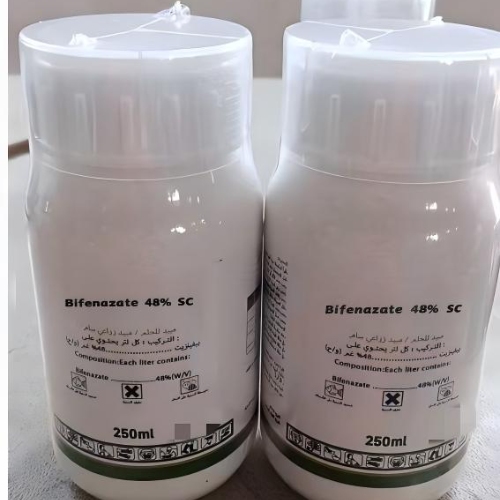
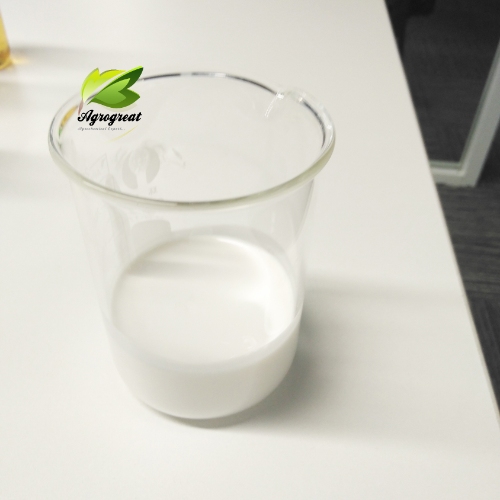
- Overview
- Recommended Products
This product is a 480 g/L bifenazate suspension concentrate (SC) formulation, belonging to the carbazate class of selective foliar spray acaricides. Bifenazate acts primarily by inhibiting mitochondrial electron transport at the Qo site of cytochrome b (Complex III), disrupting energy (ATP) production in mites, and also functions as a positive allosteric modulator of GABA-gated chloride channels. It exhibits contact action with no systemic properties, providing rapid knockdown and long-lasting residual control.
Suitable for various crops such as apple, pear, peach, grape, strawberry, citrus, cotton, vegetables (pepper, cucumber, tomato, etc.), tea, hops, and ornamental plants. It is used to control a wide range of phytophagous mites including two-spotted spider mite, European red mite, citrus red mite, McDaniel spider mite, Lewis spider mite, and tea yellow mite. Please use according to the recommended dosage within the registered and approved areas.
| Product Name | Bifenazate 480 g/L SC |
| Active ingredient | Bifenazate |
| Active ingredient content | 480 g/L |
| Formulation | SC, Suspension Concentrate |
| Product Category | Insecticide |
| Bifenazate CAS No. | 149877-41-8 |
| Main Uses | Selective non-systemic foliar acaricide for control of phytophagous mites (eggs and all motile stages) in a wide range of crops |
| Targeted Pests and Diseases | Phytophagous mites: Two-spotted spider mite (Tetranychus urticae), European red mite (Panonychus ulmi), citrus red mite (Panonychus citri), McDaniel spider mite (Tetranychus mcdanieli), Lewis spider mite (Eotetranychus lewisi), tea yellow mite (Polyphagotarsonemus latus), and other Tetranychus species. Active on eggs, larvae, nymphs, and adults, with highest activity on larvae and nymphs |
| Minimum Order Quantity | 1000L |
| Bulk packing | 1000L IBC drum, 200L drum, 20L drum |
| Small packing | 5L drum & 4drums/carton; 1L, 500ml, 250ml, 200ml, 100ml, 50ml bottle, 10L/carton |
| Documentation Support | ICAMA, COA, MSDS, TDS, Product Specifications,Packaging Information,etc. |
| Sample Service | Free for 200ml |
| Place of origin | China |
| Supplier | Agrogreat |
| Customized Services | bottle,label,bag, carton, logo Brand Customized |
Key Functions
Bifenazate is a carbazate acaricide discovered by Uniroyal Chemical (now Chemtura Corporation) for the control of phytophagous mites infesting agricultural and ornamental crops. Its mode of action was initially thought to be neurotoxic, acting on the GABA receptor in the central nervous system of mites; however, subsequent research has demonstrated that bifenazate primarily targets the mitochondrial electron transport chain, specifically inhibiting Complex III at the cytochrome b Qo site (ubiquinol oxidase), which disrupts energy (ATP) production and leads to mite death. Bifenazate is also reported to act as a positive allosteric modulator of GABA-gated chloride channels containing the Rdl subunit homolog TuGABAR in Tetranychus urticae. The compound is classified as IRAC Group 20D (mitochondrial Complex III electron transport inhibitors — Qo site). Bifenazate is a non-systemic acaricide with predominantly contact action and long residual activity. It is active on all mite life stages — eggs, larvae, nymphs, and adults — with the highest activity on larvae and nymphs. It provides rapid knockdown effect (usually within 3 days) and residual activity on leaves lasting up to 4 weeks. Bifenazate exhibits high selectivity toward phytophagous mites versus predatory mites (greater than 280-fold), with low risk to predatory mites, parasitoids, and lacewings, making it suitable for Integrated Pest Management (IPM) and resistance management programs. It has no cross-resistance with currently available acaricides
Key Benefits
1. Broad-spectrum acaricidal activity effectively controlling a wide range of phytophagous mites, including two-spotted spider mite (Tetranychus urticae), European red mite (Panonychus ulmi), citrus red mite (Panonychus citri), McDaniel spider mite, Lewis spider mite, tea yellow mite, and other Tetranychus species.
2. Wide range of application, suitable for apple, pear, peach, grape, strawberry, citrus, cotton, vegetables (pepper, cucumber, tomato, etc.), tea, hops, and ornamental plants.
3. Unique mode of action — mitochondrial Complex III inhibitor (IRAC Group 20D) with no cross-resistance to currently available acaricides, ideal for Insect Resistance Management (IRM) and rotation programs.
4. Active on all mite life stages — eggs, larvae, nymphs, and adults — providing comprehensive control of the entire mite population.
5. Rapid knockdown effect — mites stop feeding and moving soon after contact, with significant mortality within 3 days.
6. Long-lasting residual activity — provides up to 4 weeks of protection on treated foliage, reducing the number of applications required.
7. Excellent selectivity — highly selective toward phytophagous mites versus predatory mites (greater than 280-fold), with low risk to predatory mites, parasitoids, and other beneficial insects, compatible with IPM programs.
8. Suspension concentrate (SC) formulation — good stability, easy to measure and mix, suitable for foliar spray application.
9. Low risk to bees and other pollinators when used as directed; safe to crops at recommended dosages
●The actual applicable crops and control spectrum shall strictly comply with the provisions of the locally registered label.
●The actual use instructions, crop range, diseases, application rates, and conditions of use are subject to the label.
●Do not apply to crops or diseases not specified on the local label.
| Applicable Crops | Targeted Diseases/Pests |
| Apple | Red spider mite (Panonychus ulmi), two-spotted spider mite |
| Papaya | Two-spotted spider mite |
| Strawberry | Two-spotted spider mite, tea yellow mite |
| Pepper (Chilli) | Tea yellow mite (Polyphagotarsonemus latus) |
| Ornamental rose | Tea yellow mite, two-spotted spider mite |
| Citrus | Citrus red mite (Panonychus citri) |