EN
EN




- Overview
- Recommended Products
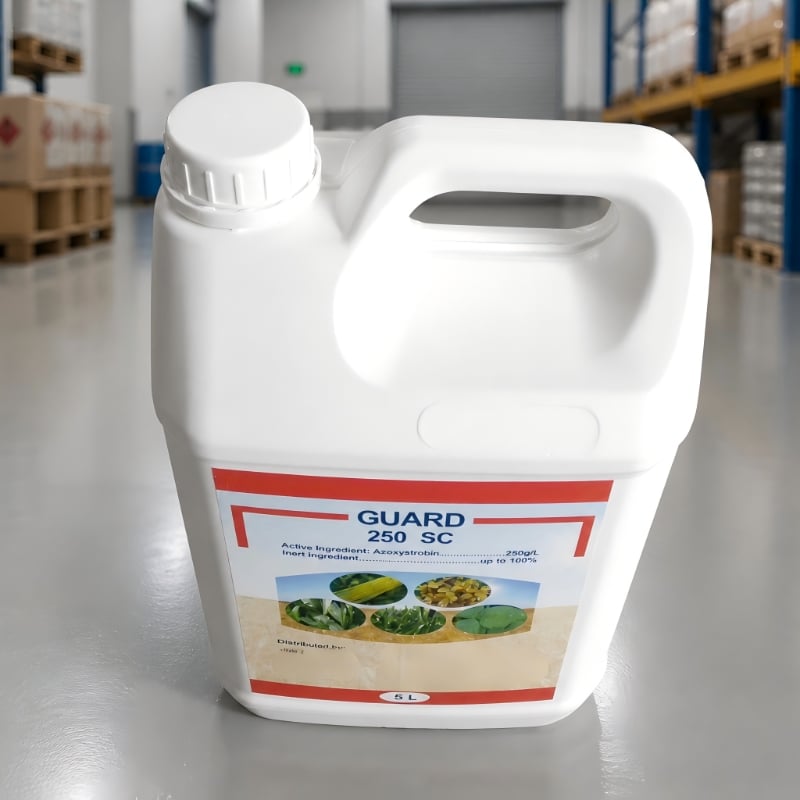
This product is a 250 g/L azoxystrobin suspension concentrate (SC) formulation, belonging to the strobilurin (QoI, Quinone outside Inhibitor) class of broad-spectrum systemic fungicides. Azoxystrobin is a synthetic analogue of the natural fungicidal compound strobilurin A produced by wood-rotting basidiomycete fungi. It acts by binding to the cytochrome bc₁ complex (Complex III) in the fungal mitochondrial inner membrane, blocking electron transfer at the Qo site and preventing ATP synthesis via oxidative phosphorylation, thereby inhibiting spore germination, mycelial growth, and sporulation. It exhibits protective, curative, and eradicative (antisporulant) activity with systemic and translaminar movement.
Suitable for various crops such as cereals (wheat, barley, triticale, oats, rye), rice, maize, potato, tomato, grape, cucurbits, banana, citrus, peanut, soybean, cotton, and ornamental plants (rose, chrysanthemum, carnation). It is used to control a wide range of fungal diseases including powdery mildew, downy mildew, rust, late blight, early blight, anthracnose, leaf spot, sheath blight, and rice blast. Please use according to the recommended dosage within the registered and approved areas.
Parameters
| Product Name | Azoxystrobin 250 g/L SC |
| Active ingredient | Azoxystrobin |
| Active ingredient content | 250 g/L |
| Formulation | SC, Suspension Concentrate |
| Product Category | Fungicide |
| Chlorfenapyr CAS No. | 131860-33-8 |
| Main Uses | Broad-spectrum systemic strobilurin fungicide with protective, curative, and eradicative action for control of a wide range of fungal diseases in agricultural and horticultural crops |
| Targeted Pests and Diseases | Major diseases: Powdery mildew (Blumeria graminis, Erysiphe spp., Sphaerotheca pannosa), downy mildew (Plasmopara viticola, Pseudoperonospora cubensis), rust (Puccinia spp., Uromyces dianthi), late blight (Phytophthora infestans), early blight (Alternaria solani), net blotch (Pyrenophora teres), rhynchosporium/scald (Rhynchosporium secalis), brown rust/dwarf rust (Puccinia hordei), rice sheath blight (Rhizoctonia solani), rice blast (Magnaporthe oryzae), brown spot (Bipolaris oryzae), anthracnose (Colletotrichum spp.), leaf spot, grey leaf spot, leaf blights, and molds. Active against fungal pathogens from all four major taxonomic groups: Oomycetes, Ascomycetes, Deuteromycetes, and Basidiomycetes |
| Minimum Order Quantity | 1000L |
| Bulk packing | 1000L IBC drum, 200L drum, 20L drum |
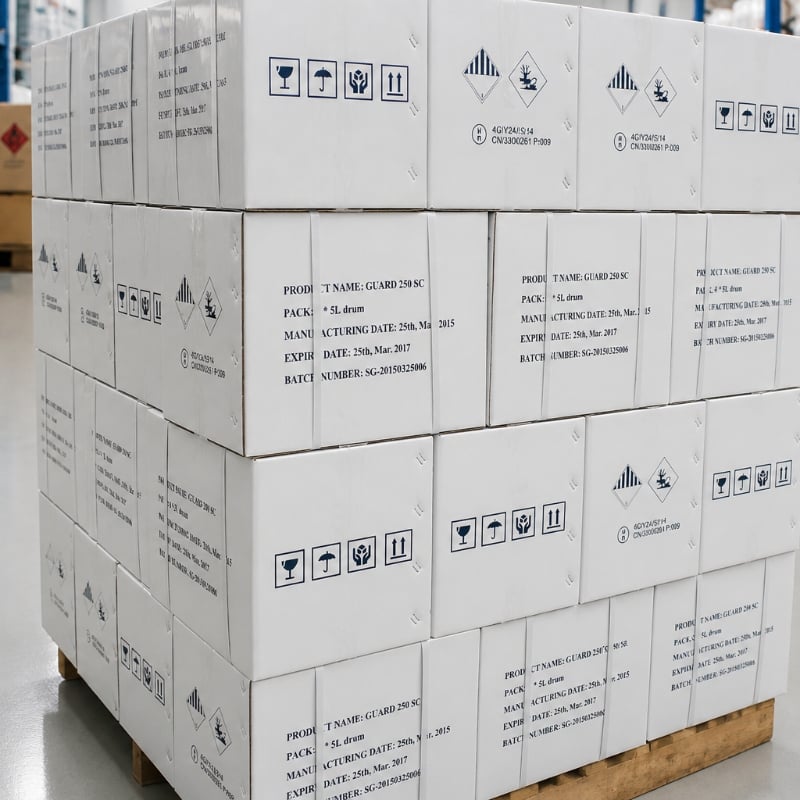
| Small packing | 5L drum & 4drums/carton; 1L, 500ml, 250ml, 200ml, 100ml, 50ml bottle, 10L/carton |
| Documentation Support | ICAMA, COA, MSDS, TDS, Product Specifications,Packaging Information,etc. |
| Sample Service | Free for 200ml |
| Place of origin | China |
| Supplier | Agrogreat |
| Customized Services | bottle,label,bag, carton, logo Brand Customized |
Key Functions
Azoxystrobin is a synthetic strobilurin fungicide belonging to the QoI (Quinone outside Inhibitor) class, FRAC Group 11. It was developed by Zeneca Agrochemicals (now Syngenta) and first discovered in 1988 after the synthesis of approximately 1,400 analogues, following extensive research inspired by the natural strobilurin compounds produced by wood-rotting basidiomycete fungi such as Strobilurus tenacellus. Azoxystrobin was the first strobilurin fungicide to be commercialized and rapidly became one of the most widely used fungicides globally, marketed under the trade name Amistar. Azoxystrobin binds with high affinity to the Qo site of the cytochrome bc₁complex (Complex III) in the fungal mitochondrial inner membrane. By occupying this site, it blocks electron transfer from ubiquinol to cytochrome c₁, disrupting the mitochondrial electron transport chain and preventing ATP synthesis via oxidative phosphorylation. Without ATP, the fungal pathogen cannot maintain essential metabolic processes — spore germination is inhibited, mycelial growth ceases, and sporulation is blocked, ultimately leading to fungal death. This mechanism is classified as FRAC Group 11 (QoI fungicides — Strobilurins). Azoxystrobin is not cross-resistant to other site-specific fungicides such as benzimidazoles (FRAC Group 1), DMIs (FRAC Group 3), or phenylamides (FRAC Group 4), making it an effective tool for fungicide resistance management programs.
Azoxystrobin exhibits a very broad spectrum of activity and is active against fungal pathogens from all four major taxonomic groups: Oomycetes (e.g., Phytophthora, Plasmopara, Pseudoperonospora), Ascomycetes (e.g., powdery mildews, Fusarium, Venturia), Deuteromycetes (e.g., Alternaria, Colletotrichum, Rhizoctonia), and Basidiomycetes (e.g., rusts). Azoxystrobin has systemic and translaminar properties. It is absorbed by plant leaves and translocated within the plant, and it also moves through leaf tissue from the treated surface to the untreated surface, controlling pests on both sides of the leaf. The product provides protective, curative, and eradicative (antisporulant) activity — it prevents spore germination on the plant surface, controls established infections, and inhibits further spore production. The vapour activity of azoxystrobin is not pronounced, but its translaminar movement and systemic distribution provide good coverage of treated crops. Azoxystrobin is effective at low dose rates, providing long-lasting residual control and reducing the number of applications required per season. Because QoI fungicides act on a single specific target site, repeated sole use can rapidly select for resistant pathogen populations carrying the G143A mutation in the cytochrome b gene; therefore, azoxystrobin must always be used in rotation or tank-mix with fungicides from different FRAC groups as part of a Fungicide Resistance Management (FRM) program, with no more than two foliar applications of QoI-containing products per crop per season.
Key Benefits
1. Broad-spectrum disease control against all four fungal groups: Azoxystrobin is active against fungal pathogens from Oomycetes, Ascomycetes, Deuteromycetes, and Basidiomycetes, providing comprehensive control of powdery mildew, downy mildew, rust, late blight, early blight, anthracnose, leaf spot, sheath blight, rice blast, net blotch, rhynchosporium, and many other diseases across diverse crop systems.
2. Triple mode of action — protective, curative, and eradicative: Inhibits spore germination on the plant surface (protective), penetrates leaf tissues to control established infections (curative), and inhibits sporulation to prevent further disease spread (eradicative/antisporulant).
3. Systemic and translaminar activity: Absorbed by plant leaves and translocated within the plant, with translaminar movement through leaf tissue to control pathogens on both sides of treated leaves, ensuring comprehensive coverage of plant surfaces.
4. Unique QoI mode of action — FRAC Group 11: Inhibits mitochondrial respiration at the cytochrome bc₁complex (Complex III), with no cross-resistance to benzimidazoles, DMIs, or phenylamides. Suitable for rotation and tank-mix programs in Fungicide Resistance Management (FRM) strategies.
5. Wide range of application: Suitable for cereals (wheat, barley, triticale, oats, rye), rice, maize, potato, tomato, grape, cucurbits, banana, citrus, peanut, soybean, cotton, and ornamental plants (rose, chrysanthemum, carnation).
6. Long-lasting residual activity and low dose rates: Effective at low application rates with prolonged protection on treated crops, reducing the number of applications required per season and lowering overall production costs.
7. Excellent rainfastness: The SC formulation adheres well to plant surfaces and provides good rainfastness, ensuring reliable disease control under variable weather conditions.
8. Suspension concentrate (SC) formulation: Good stability, easy to measure and mix, suitable for foliar spray application with conventional equipment. Produces minimal dust compared to wettable powders and offers good storage safety.
9. Effective against resistant pathogen populations: Particularly valuable where conventional fungicides have failed due to resistance development, with a mode of action distinct from benzimidazoles, DMIs, and phenylamides.
10. Compatible with Integrated Pest Management (IPM) programs: When used in rotation with fungicides from different FRAC groups and as part of an integrated disease management strategy, this product provides a reliable tool for sustainable crop protection.
●The actual applicable crops and control spectrum shall strictly comply with the provisions of the locally registered label.
●The actual use instructions, crop range, diseases, application rates, and conditions of use are subject to the label.
●Do not apply to crops or diseases not specified on the local label.
| Applicable Crops | Targeted Diseases/Pests |
| Wheat / Barley / Triticale | Powdery mildew (Blumeria graminis), net blotch (Pyrenophora teres), rhynchosporium/scald (Rhynchosporium secalis), brown rust/dwarf rust (Puccinia hordei), yellow rust (Puccinia striiformis) |
| Rice | Sheath blight (Rhizoctonia solani), rice blast (Magnaporthe oryzae), brown spot (Bipolaris oryzae) |
| Potato | Late blight (Phytophthora infestans), early blight (Alternaria solani) |
| Tomato | Early blight (Alternaria solani), leaf mold (Fulvia fulva), late blight (Phytophthora infestans) |
| Grape | Downy mildew (Plasmopara viticola), powdery mildew |
| Cucurbits (Cucumber / Melon / Watermelon) | Downy mildew (Pseudoperonospora cubensis), powdery mildew |